

Meet CDI graduate: from a lawyer to enterpreneur
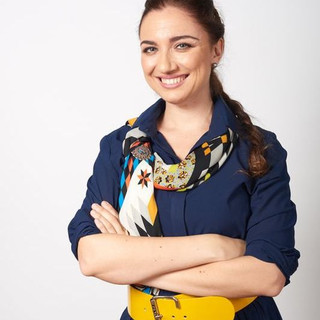
Rachel Wolff from Netherlands is a truly “Renaissance” woman. She is a lawyer turned entrepreneur, focused on AI governance, digital wellbeing, and human behavior, as well as a personal physical trainer. Currently she works for two days a week as a senior legal counsel, and the rest on her movement app and coaching and training practice, and repeats CDI certification. We spoke to her about how studying with CDI has changed her career path and how she sees the world.
What got you interested in digital wellbeing and CDI?

It started with noticing my own behavior and what was happening with my behavior when it comes to my phone in late 2018. I recently wrote about it here.
After Anastasia’s talk in February 2019 in Amsterdam on "Neuroscience of Digital Distractions", it became clear to me that this is something I want to learn more about and, in the future, help others. Joining this talk (and then doing the course) changed the direction of my career, combined with my passion for movement (thank you for that❤️)
What also attracted me to your course was its coaching component. At the same time, I was doing a lifestyle coaching course, and it felt so complementary to each other. I also remember buying Anastasia’s book and reading it.
You graduated a few years ago and have tried several pathways before you landed on doing what you are doing. What worked and what did not?
Yes, I graduated in April 2020. I gave a few workshops, but they were always one-offs, and I wanted to do programs, but that was harder to sell in my experience. I don't think I tried hard enough to really sell and focus on this.
I started coaching some clients around social media use, but I ended up working with clients who had a hard time saying no and were fed up with their employer (several changed jobs or started for themself). I also worked with clients on energy management and adding movement.
Working as a personal trainer, I had clients who lacked mobility and were complaining about their backs and the hours spent sitting behind their desks (or forgetting to use the standing desk). So I started telling them they needed to move more during the day and buy resistance bands, which they could use for some simple exercises during the workday to activate the muscles. I provided them with some movements they could do during the workday. This, combined with the lack of focus people were experiencing, was the birth of Movebite, an app reminding employees to take movement breaks.
How do you use what you've learned at CDI in creating the app?
I use it in two ways: one is to create an app that supports (digital) wellbeing based on the theory we learned in the course. And second, avoid designing an app with an addictive design.
I also incorporate the knowledge as part of what we call " infobites", little information snacks that help the user better understand the benefits of movement breaks (this is the educate/ raise awareness part). To give you an example in our focus feature, which is a Pomodoro timer, we ask the user to commit to one task, close all tabs, email, and messenger (avoiding multitasking once they commit to the Pomodoro timer). Just a simple small tip to help create this new routine. I have done exactly the same with some coaching clients and have noticed it works, so I am curious how this will work once we launch this feature in September.
Another example: one of my PT clients is very stressed and tired at the moment, and I explained the green, orange, and red zones of nervous system to her that we learned about in the course and asked her about her interoception (in simple words, how connected she felt to her body). She was aware that she is not connected, and I asked her if she is open to adding this to her personal training, so we will create more awareness when we do resistance training.
Adding the knowledge of body to the coaching session, as we learn it now (I am repeating the course), is a great skill to have and fits my general philosophy of how to look at the whole system (as opposed to what happens in the mind only).
I understand that you initially were going to pursue your ICF accreditation, then stopped it, and now are back to it – what were the reasons?
Last year I decided to go back to getting my ICF accreditation, which I stopped in 2023, because I went full focus into Movebite. When last year we and my co-founder Stefan decided we’ll go part-time on Movebite, I knew I wanted to go back to pursuing ICF accreditation. I believe it gives the credibility companies are looking for, and I can combine it with a program (with or without the app) for companies.
Funny side note: I am currently doing the AI governance training, and I believe coaching skills are a great skill to have for the types of conversations you need to have in order to design an AI governance program.
What are your key achievements you yourself are proud of over the past few years in digital wellbeing space?
· Building an app, getting small funding for it and a small grant. With the grant, we were able to do some research (see: article 1 and article 2).
· Won a pitch through a startup incubator, LinkedIn post here.
· Never promoted my coaching practice, but I am proud of the results my clients achieved through the coaching sessions with me. I coached around 18 clients.
· Gave several workshops on digital wellbeing (never promoted it either, was always through my network).
In general, I made the step from a safe full-time job to pursuing my interest in digital wellbeing. That led me to co-found Movebite, work directly with individuals as a coach, and help organizations think differently about healthier ways of working.
And now my legal background and my work in digital wellbeing are starting to come together through AI governance. Instead of choosing between law and wellbeing, I'm able to combine both. I can contribute to building AI that is not only compliant and trustworthy but also supports people in using it in a healthy and responsible way.
I understand you are making your way now into AI governance as part of your career continuation. Did digital wellbeing education anyhow change your perspective on it? Is it a benefit in your consulting role?
Yes, digital wellbeing changed how I look at it. In AI governance, you focus on safe, secure and lawful AI. However, my work in digital wellbeing has made me realize there is another dimension that deserves attention: the responsible use of AI in the workforce (and I'm not talking about what data we can put in an LLM, as that is already part of the standard AI governance principles). It should also consider how AI affects the people using it daily.
Questions such as how AI influences attention, decision-making, critical thinking, autonomy, and work habits should be part of the conversation (and this is very aligned with digital wellbeing and topics we learned).
In my view, good AI governance is about governing the tech and helping people use it in ways that support both organizational goals, building responsible AI and human wellbeing.
Anything else that will be useful for those thinking of building digital wellbeing career/brand to know based on your experience?
Talk and write about it. I wish I had done that earlier. Find the topics that you are particularly drawn to. So in my case, it was the movement combined with digital wellbeing and now the AI governance. Be flexible and try different things. Don't overcommit to something, speak with people about your idea and see what your ideal client is looking for.
If you got inspired by Rachel's story and are considering a career change, check out Consciously Digital Institute certification in digital wellbeing. This 1-year long program provides full support with both learning the theory, behavioural change skills and advice on setting up the business. If you are wondering what it's like to study with us, the easiest first step is to join the 5-day Attention Detox Challenge - it's a fun neuroscience-based program requiring only 1 hour per day for 5 days from you.


Comments